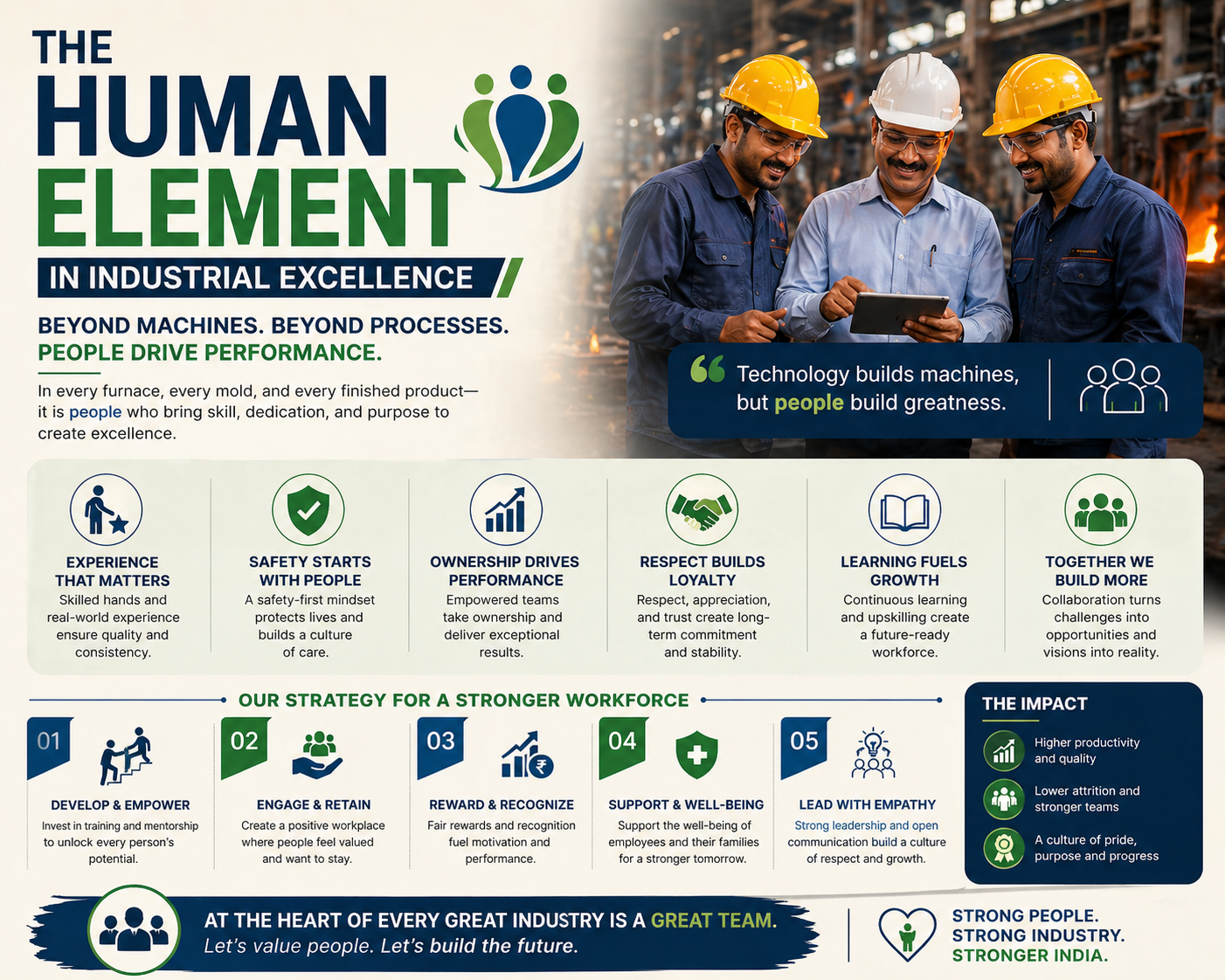
The Human Element in Industrial Excellence
The Foundry Floor Crisis: Solving the Manpower Puzzle in Tier-2 India
In the industrial clusters of Kolhapur, Belgaum, Coimbatore, and Rajkot, the foundry floor remains the backbone of Indian engineering. However, the conversation in the "Melt Shop" has shifted from production targets to a much more difficult problem: Where are the people?
For a foundry owner in a Tier-2 city, the challenge isn’t just "labor cost"—it is the fundamental struggle to find and keep reliable, skilled manpower.
Operating a foundry is a feat of endurance. Between fluctuating raw material prices and demanding delivery schedules, the "Human Element" has become the most volatile variable in the equation.
The Ground Reality: Three Core Challenges
The "Aspiration Gap": The younger generation in Tier-2 cities is moving away from the "3Ds" of the foundry: Dirty, Dangerous, and Difficult. A youth from a traditional foundry-working family in Kolhapur would often prefer a lower-paying service job in a retail mall or an AC office than a higher-paying role as a fettler or a furnace operator. The "dignity of labor" on the shop floor is under psychological siege.
The "Skill Stagnation" Trap: We often hire "helpers" and expect them to become "operators" by osmosis. However, modern casting demands—such as moving from cupola to induction melting—require technical precision. Without formal training, we suffer from high rejection rates and "trial-and-error" metallurgy, which directly impacts profitability.
The Migration & Festival Volatility: Whether it is the sugar-cane harvest season in Western Maharashtra or major festivals like Holi and Diwali, Tier-2 foundries face massive, sudden attrition. When 30% of your workforce goes home and doesn’t return for a month, the fixed costs continue—but revenue drops sharply.
A Strategy for Stability
Foundry owners cannot change the national economy, but they can transform their local "Human Infrastructure." Here’s how:
Formalize the "Master-Apprentice" Model: Instead of informal learning, implement a structured shadowing program. Identify experienced veterans and provide a mentor bonus to train juniors. This helps preserve critical hands-on knowledge before it disappears.
Tiered Incentives vs. Flat Wages: A flat daily wage promotes a transactional mindset. Introduce skill-based pay grades. When workers see clear growth paths, they are less likely to switch jobs for marginal pay differences.
Invest in "Small-Scale Welfare": In Tier-2 regions, employer reputation matters deeply. Providing clean water, proper PPE, and access to basic healthcare builds strong emotional loyalty among workers.
The Shift to "Supervisory Excellence": Workers don’t leave jobs—they leave poor management. Train supervisors in communication and leadership. A respectful and supportive supervisor can significantly reduce attrition.
The foundry industry is the mother of all manufacturing. While we cannot remove the heat from the furnace, we can improve the climate of the workplace.
In 2026, the most successful foundries in cities like Belgaum and Coimbatore won’t be the ones with the newest machines, but the ones that have successfully built a "Loyalty Ecosystem"—where workers feel like partners, not just labor.
Is your plant a "stepping stone" where people learn and leave, or a "Skill Hub" where they stay and grow?
The answer to that question will define your profitability in the next decade..